
Why I’m Bringing Talking Drupal Back to Live Streaming
After 13 years, I’m bringing Talking Drupal back to its roots.
When I founded the show in 2013, the first 125 episodes were recorded using Google Hangouts On Air, which was discontinued in August 2019. It was simple: start a video call, broadcast it live to YouTube, and that was the episode.
At the time, production quality, layout, video, and audio weren’t the priority. The goal was to get conversations out into the Drupal community.
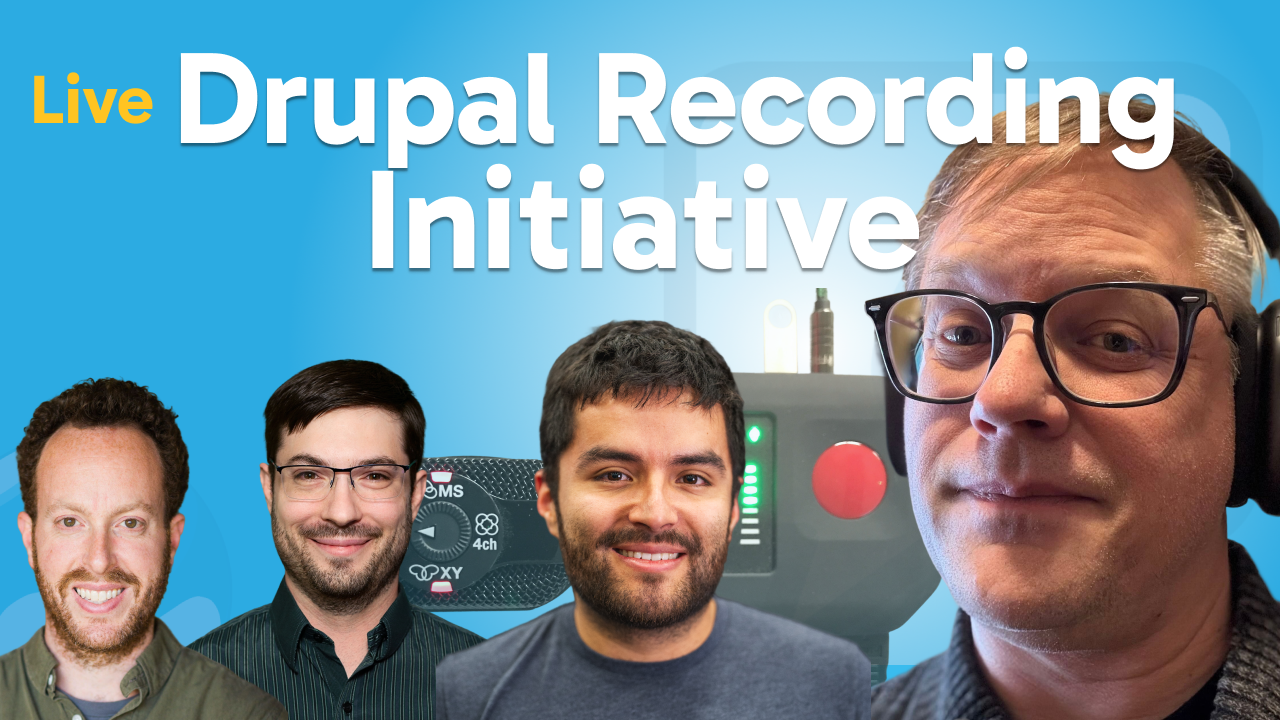
After those early episodes, we transitioned to an audio-only format for a period of time. But recently, I revisited the idea of going live again. After a lot of discussion with the team, and a six-episode test run (#546–#551), the decision is clear:
Live streaming is here to stay.
The Mind Shift
The hardest part of moving back to live streaming isn’t technical; it’s philosophical.
Over the years, Talking Drupal has been lightly edited. We’d clean up mistakes, remove long pauses, and cut excessive filler words (“um,” “like,” etc.). We also told guests that if they wanted something removed after the recording, we could do that. That safety net helped everyone feel comfortable.
Live streaming changes that.
Yes, we can pull down a stream after the fact, but that’s not the intent. The goal is to embrace the live format.
We saw this firsthand in episode #549, which included a pre-recorded promotion for the Drupal AI Summit. Due to an audio issue, the promo audio was silent. While YouTube Studio offers some editing capabilities, it doesn’t allow you to fix missing audio in the middle of a stream. We had to take the video down, repair it offline, and re-upload it.
That experience reinforced an important lesson: live means accepting imperfection.
After more than 550 episodes, I realized how rarely we’ve needed significant edits. The benefits of going live outweigh the comfort of having that safety net.
Why Live Streaming Matters
From a production perspective, the benefits are clear:
1. Community Participation
Live streaming creates a two-way experience. The audience can ask questions, share feedback, and be part of the conversation as it happens.
2. Minimal Post-Production
With fewer edits, post-production is dramatically reduced. That frees up time to focus on growing the show and creating new content.
3. Live Energy
There’s a different energy when you’re live. Conversations feel more immediate and authentic, and that carries through to the final episode.
What This Means
Bringing Talking Drupal back to live streaming isn’t just a format change; it’s a mindset shift.
It’s about prioritizing authenticity over perfection, and connection over polish.
That same philosophy is shaping the work I do at Second Signal Media. Many organizations default to highly produced, heavily edited content. But in many cases, what actually resonates is something more direct and more human.
Live streaming, done well, creates that connection.
Join Us Live
If you’ve been listening to Talking Drupal, I’d encourage you to join us live. Bring your questions. Be part of the conversation. Experience the show as it happens. We are currently streaming on YouTube and LinkedIn.